$ 2375000
Personal Injury

A product that breaks, overheats, sparks, or behaves unexpectedly can cause life-changing harm. When that failure happens during normal or reasonably foreseeable use, it may point to more than a simple accident. It may be a sign that a safety problem existed before the product ever reached you.
As product liability lawyers Campbell residents may consult after a serious injury, we know that the product itself and the circumstances of the incident can tell an important story. A careful review may show whether poor design, a production error, weak warnings, or careless safety practices played a role.
Dangerous products can show up in everyday life. Vehicles, home appliances, power tools, children’s items, medical devices, recreational equipment, and lithium-ion batteries can all cause serious injuries when something goes wrong.
Autumn can bring added use of battery-powered decorations, costume accessories, outdoor lighting, and products used during holiday gatherings. A battery that overheats, a light fixture that shorts out, or a decoration with unsafe wiring may seem like an isolated problem at first. Yet a serious failure can raise questions about how the product was designed, made, tested, labeled, distributed, or maintained.
Not every product-related injury proves negligence. Still, an unexpected failure during ordinary use can be a strong reason to investigate. We look at whether a company had a chance to identify a danger and failed to take reasonable steps to prevent harm.
A defect can arise at several points before a product reaches a consumer. Some problems affect every item in a product line, while others happen only during production or assembly.
Common product defect concerns include:
Negligence may be part of the picture when a company fails to conduct reasonable testing, ignores customer complaints, uses poor materials, skips inspections, or keeps selling a product after it learns about a serious risk. Internal records about testing, complaints, recalls, design changes, and safety decisions may matter greatly in a claim.
The injuries from a failed product can be severe. Depending on what happened, a person may suffer burns, cuts, broken bones, electric shock, traumatic brain injuries, spinal injuries, or other catastrophic harm. When the injury is serious and the product did not perform as expected, prompt legal review may help preserve the facts before they disappear.
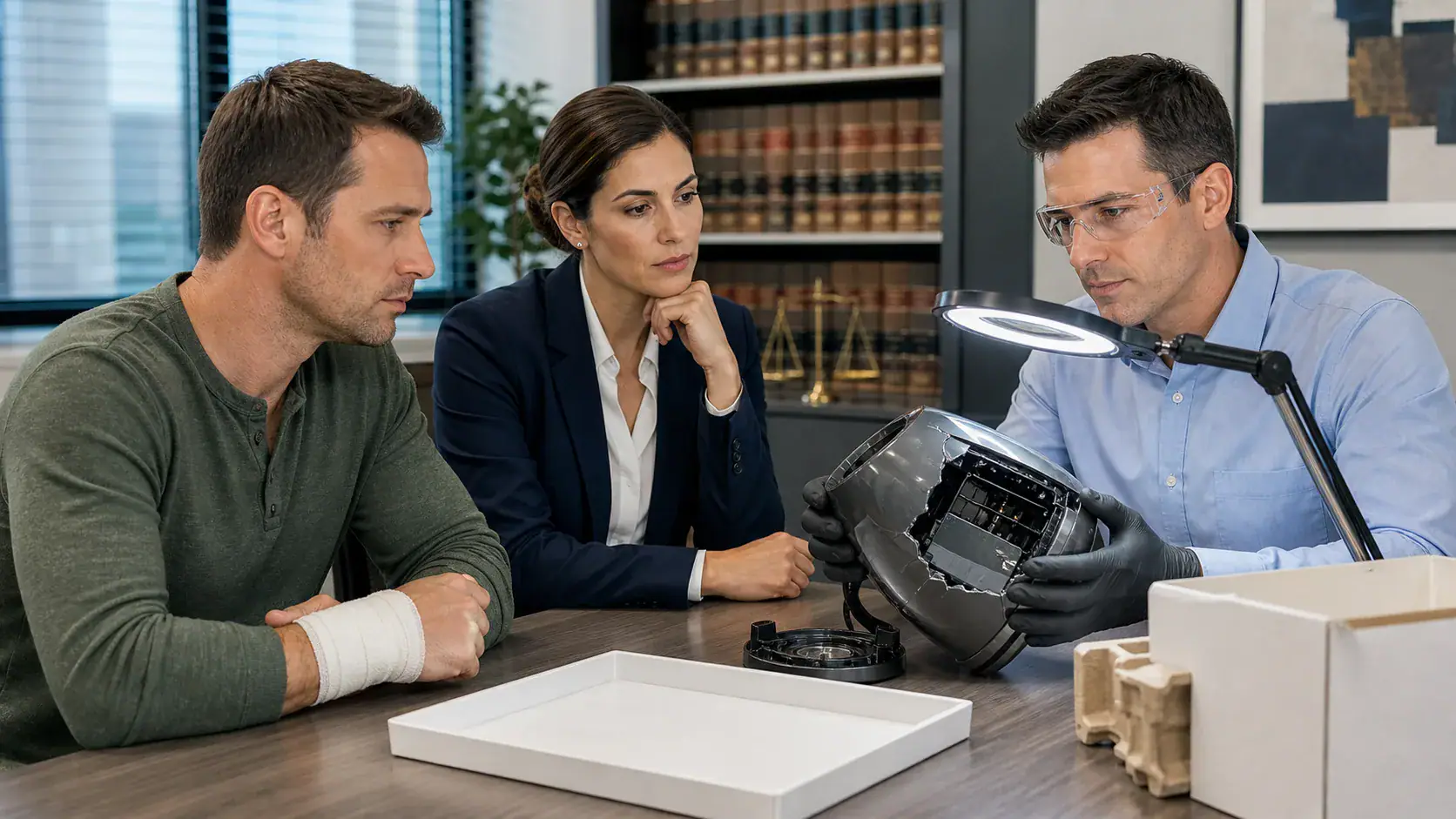
The damaged product is often one of the most important pieces of evidence. A broken component, damaged battery, failed guard, defective wiring, or missing label may help explain what happened. When possible, we recommend that you do not repair, throw away, alter, or return the item before receiving legal guidance.
Other records can also help build a clearer picture of the incident:
A product liability lawyer in Campbell may work with engineers, safety professionals, accident reconstruction specialists, and other qualified experts to examine why a product failed. The review may involve both the physical evidence and the actions of businesses in the supply chain.
Evidence can disappear fast. A retailer may ask for the product back. A manufacturer may offer a replacement. Someone may try to fix the item before realizing that the damage itself could reveal a safety issue. Preserving the product in its post-incident condition can make a meaningful difference in the investigation.
More than one company may be involved in getting a product into your hands. Depending on the facts, responsibility may rest with the designer, manufacturer, component-part maker, assembler, distributor, wholesaler, retailer, or a company that installed, repaired, or maintained the product.
Businesses sometimes point fingers at each other after an injury. A vehicle manufacturer may blame a component supplier. A retailer may say it did not know about the risk. An installer may argue that the product itself was defective. We investigate the full chain to determine whether a defect, careless conduct, inadequate warnings, or failure to respond to reported dangers contributed to the harm.
Product use also matters. Companies may claim that misuse caused the incident. That argument does not always end the inquiry, especially if the use was reasonably foreseeable or the product lacked safeguards and warnings that could have reduced the risk. Each situation depends on its own evidence.
Caputo & Van Der Walde LLP represents people harmed by serious accidents, defective products, and catastrophic injuries in Santa Clara County, throughout Northern California, and in appropriate cases in Southern California. For Campbell residents, the first step in hiring a product liability lawyer is often identifying every business and decision that may be connected to the failure.
Quick action after a serious product failure can help protect evidence and preserve your options. California has filing deadlines, and delays can make it harder to locate witnesses, obtain surveillance footage, identify product records, or document the product’s original condition. Early settlement offers or requests for statements may also come before you fully understand the impact of an injury.
Medical care should come first. After that, keep the product and packaging in a safe place, save your records, document what happened, and avoid making changes to the item. A thorough investigation can determine whether negligence or another legal theory may apply, but that review is much harder when important evidence has been discarded or altered.
If a defective product caused your injuries, our product liability lawyer in Campbell can evaluate the circumstances and explain your legal options. Caputo & Van Der Walde LLP can help identify responsible parties and pursue appropriate compensation for your losses. Contact us to discuss your case with our team.






As members of the Multi-Million Dollar Advocates Forum® and the Million Dollar Advocates Forum®, we have proven our ability to negotiate and litigate on behalf of our clients successfully. Retain us to put our tactical strategies to work for you. These skills are what make our legal team such a formidable opponent in any courtroom or negotiation setting.