$ 2000000
Motor Vehicle Accident

A bicycle crash in Saratoga can involve more than a driver’s mistake. The road itself may have played a part, especially when its layout leaves a rider with little room to react. We look closely at the full setting of a collision, including the roadway, nearby signs, pavement, lighting, and bike infrastructure.
A bike lane that suddenly ends, a narrow street, or a turn lane that cuts across a cyclist’s path can create predictable danger. When vegetation blocks a driver’s view or traffic speeds past an unprotected bike lane, the question becomes bigger than who was behind the wheel. Liability may also involve the people or entities that designed, controlled, maintained, or worked on that road.
Poor design can turn an ordinary ride into a serious crash in seconds. A missing bike lane, a lane that narrows without warning, or confusing pavement markings may push cyclists into traffic just as drivers change lanes or turn.
Intersections can be especially risky. Drivers may focus on cars, signals, and cross traffic and miss a cyclist traveling straight through the intersection. Problems that may contribute to a collision include:
Maintenance matters, too. A road may have been reasonably designed at one point but become unsafe because of neglected conditions. Potholes, loose gravel, broken pavement, uneven utility covers, drainage grates, standing water, and debris in a bike lane can all make it harder for a rider to stay in control.
A defect does not need to be the only cause of a crash to matter. If poor pavement caused a cyclist to swerve, or if a sight obstruction kept a driver from seeing the rider in time, those facts may affect how responsibility is evaluated.
Finding out who owned or controlled the crash location is an early part of our investigation. Depending on where the collision happened, a road in Saratoga may fall under the responsibility of the City of Saratoga, Santa Clara County, the State of California, or a private property owner.
Public agencies can sometimes face claims when a dangerous condition on public property creates a foreseeable risk of injury. Still, government entities often raise defenses. They may argue that the road’s design was approved, that they did not know about the problem, or that the roadway met the standards in place when it was built.
Claims involving public property also carry deadlines that can arrive quickly. In many California injury matters, you may need to file a government claim within six months of the incident. If you are searching for a bicycle accident lawyer near me after a Saratoga crash, speaking with a lawyer promptly can help preserve evidence and identify any applicable time limits.
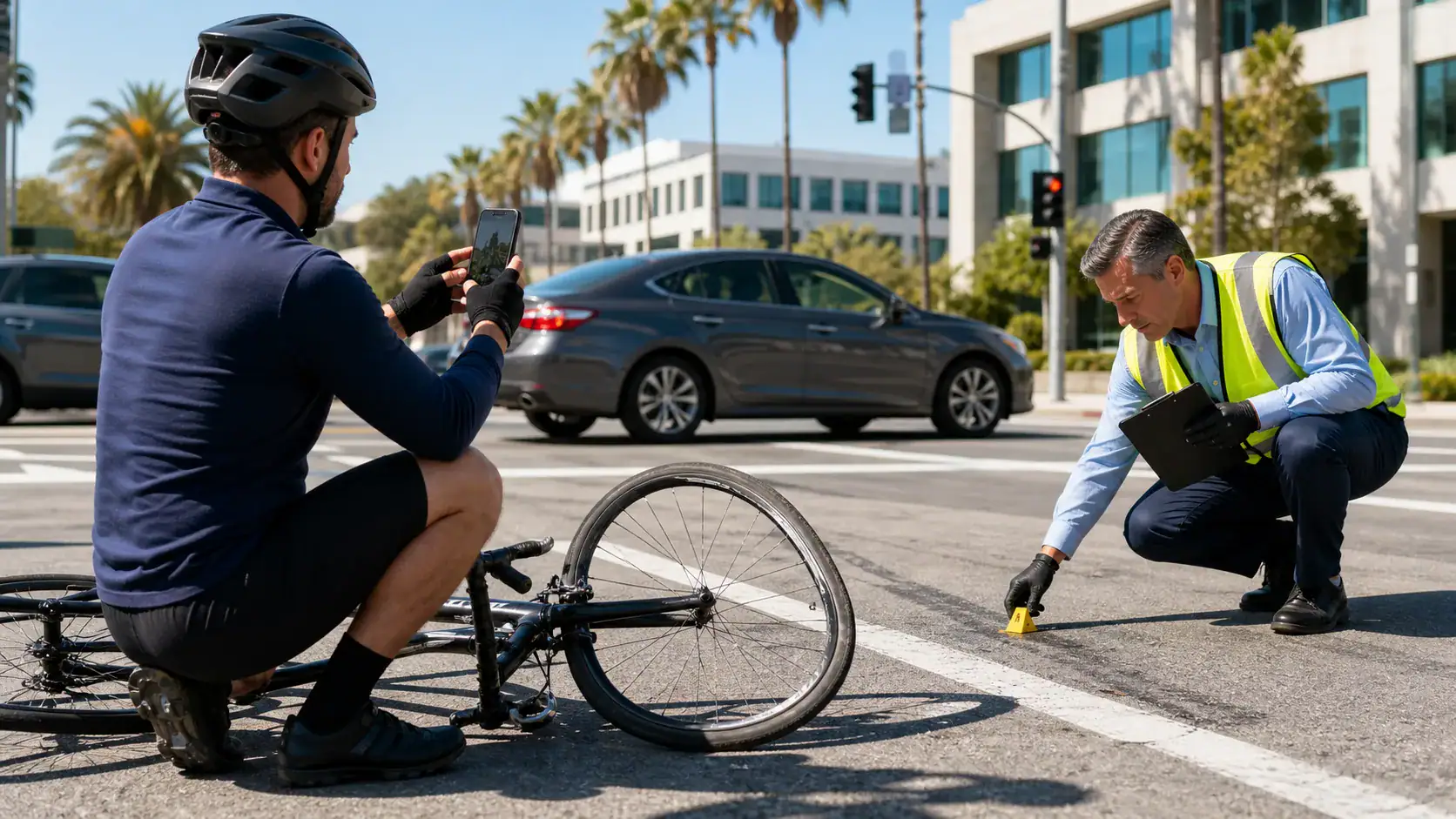
Road conditions can change fast after a collision. A pothole may be patched, leaves may be cleared, signs may be replaced, or a construction zone may disappear. That is why photographs, video, and other records can be so important.
When possible, evidence should capture more than the damaged bicycle and vehicles. We may review details such as:
Records can also show whether a hazard was known before the crash. Prior collision reports, resident complaints, maintenance logs, inspection records, work permits, public meeting notes, and traffic engineering studies may reveal a history of concern at the same location. Similar incidents can help show that a danger was foreseeable rather than unexpected.
Our work may include reviewing the scene with accident reconstruction professionals, traffic engineers, and roadway design professionals. A bicycle accident attorney in Campbell can help injured cyclists assess whether a negligent driver, public agency, contractor, or property owner may share responsibility. We represent injured people throughout Santa Clara County, Northern California, and in qualifying Southern California cases.
Autumn riding conditions can make existing road problems harder to spot. Earlier sunsets may make faded lane lines, weak street lighting, and blocked signs more dangerous for both cyclists and drivers. A road design that already provides limited visibility can become even riskier in low light.
Rain, fallen leaves, pooled water, and slick painted surfaces can also reduce traction. These problems are often worse near intersections, downhill stretches, shaded roads, and bike lanes where debris collects. Wet leaves or standing water may hide potholes, uneven pavement, or dangerous drainage features until a rider is already too close to avoid them.
Seasonal weather does not automatically excuse poor maintenance or unsafe design. Agencies and property owners may still have duties to inspect, repair, warn about, or address known hazards. At the same time, an insurer may try to blame a cyclist for riding in rain or dim light, which makes clear evidence about visibility and road conditions especially important.
After a serious bicycle crash, medical care should come first. If you are able, preserve the bicycle, helmet, clothing, photos, ride data, and any information about witnesses. Avoid repairing, discarding, or replacing damaged equipment before it can be inspected, since damage patterns may help explain what happened.
A prompt review can help identify every possible source of responsibility before records disappear or filing deadlines pass. The road, the driver’s actions, the condition of the bike lane, and a contractor’s work may all need careful attention. Preserving those details early can make it easier to understand how an unsafe roadway contributed to the crash.
Caputo & Van Der Walde LLP can assess the facts of your crash and help determine whether unsafe road design played a role. Speak with a bicycle accident attorney in Campbell about your legal options and the evidence that may support your claim. When you are ready to discuss your situation, contact us for a consultation.






As members of the Multi-Million Dollar Advocates Forum® and the Million Dollar Advocates Forum®, we have proven our ability to negotiate and litigate on behalf of our clients successfully. Retain us to put our tactical strategies to work for you. These skills are what make our legal team such a formidable opponent in any courtroom or negotiation setting.